It's tempting to think of spray foam quality as a question of the material itself — is this brand of foam good, is that formulation better. In practice, the equipment behind the application matters just as much, and often more, because it's what determines whether the material actually cures the way it's designed to.
Spray foam's performance depends on a chemical reaction happening correctly, in real time, as it's applied. That reaction requires the two components to be heated to matching temperatures, pressurized correctly, and mixed in a precise ratio — all of which is entirely a function of the rig equipment, not the material itself. A premium foam sprayed through poorly maintained equipment can perform worse than a standard formulation applied with a properly calibrated rig.
That's not a marketing claim — it's the mechanical reality of how the material works. Cell structure, adhesion, and cure quality are downstream consequences of equipment condition at the moment of application.
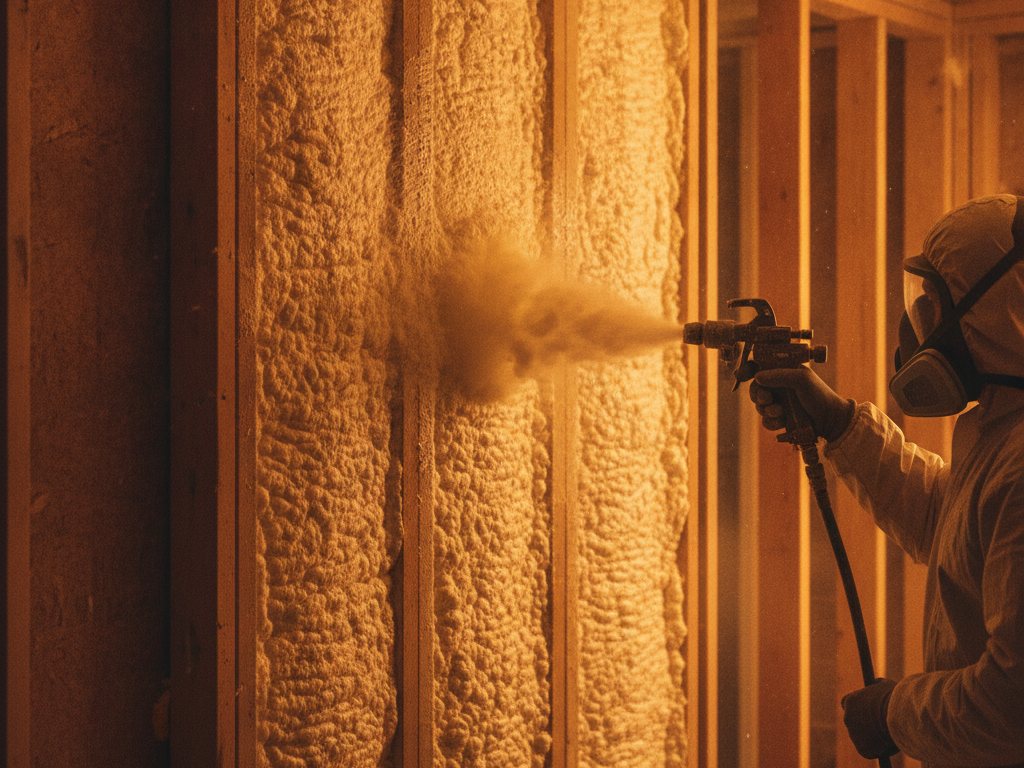
When a rig is properly maintained and calibrated, the resulting foam shows specific, checkable characteristics: consistent, uniform cell structure throughout (not patchy or inconsistent density), proper adhesion to the substrate without gaps or voids, no lingering chemical odor after the appropriate cure time, and uniform coverage without thin spots or over-application.
Off-ratio or poorly applied foam doesn't always fail immediately — it can look acceptable on install day and develop problems over months or years: reduced insulating performance, unexpected shrinkage, or in more serious cases, conditions that trap moisture and create risk for mold growth. To be direct about that last point: properly installed spray foam does not itself cause mold — but improperly applied foam (often traced back to equipment or ratio issues) can trap moisture in ways that create the conditions mold needs. The distinction matters, and it traces back to the same root cause: equipment condition at the time of application.
Similarly, when spray foam insulation does get removed from a home, it's rarely because the material failed on its own — it's much more often traced back to an installation issue that a properly equipped, well-maintained rig would have avoided in the first place.
You don't need to become an equipment expert to ask a useful question. A contractor who takes their rig seriously will have a straightforward answer to: "How do you maintain your equipment, and how do you make sure the mix ratio is correct on every job?" A vague or dismissive answer to that question is worth paying attention to — not because equipment maintenance is exotic, but because it's the actual mechanism behind a job that performs well for years instead of one that has to be redone.
If you're on the equipment side of this, the takeaway is the same one that runs through everything else on this site: a maintained, calibrated rig isn't overhead — it's the actual product you're selling. See our guides on routine rig maintenance and proportioner basics for the practical side of keeping that connection intact.
Looking for a contractor who takes this seriously? Get matched with a well-equipped, insured spray foam contractor.
Get matched with a vetted, insured spray foam contractor — free, no obligation.
Get Matched