Home / Why Rig Quality Matters
Why Rig Quality Actually Matters for the Finished Job
An honest look at how equipment condition connects to real outcomes — no fear-mongering, just the causal chain.
Home / Why Rig Quality Matters
An honest look at how equipment condition connects to real outcomes — no fear-mongering, just the causal chain.
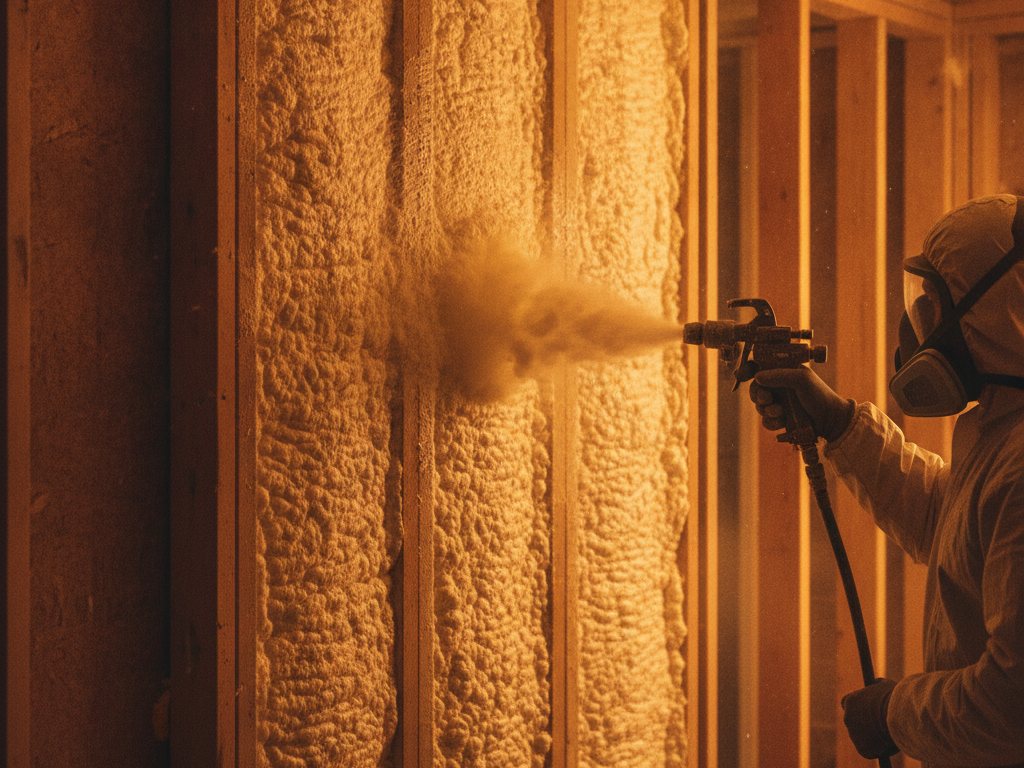
The connection between equipment and job outcomes isn't abstract — it's a direct chain. A rig that isn't properly maintained or calibrated can produce off-ratio foam. Off-ratio foam doesn't always look wrong right away, but it can cure improperly — affecting cell structure and adhesion. Over time, that shows up as real problems: reduced performance, discoloration, or a texture that isn't firm and consistent. In some cases, it's the reason spray foam gets flagged during a home inspection or has to be removed and redone.
None of this means spray foam itself is a risky material. It means the equipment and the process behind the application are what actually determine the outcome — which is exactly why this site exists.
You don't need to become an equipment expert to evaluate a contractor — but a few direct questions can tell you whether they take their rig seriously:
Equipment maintenance is only half the equation — crew training matters just as much. A well-calibrated rig in the hands of an undertrained applicator can still produce inconsistent results. Ongoing spray foam training, alongside a real maintenance schedule, is what turns good equipment into consistently good jobs.
When spray foam is removed, it's rarely because the material itself failed — it's far more often traced back to how it was applied: off-ratio foam from poorly maintained or miscalibrated equipment, applied too thick against a surface that needed ventilation, or installed by a crew that wasn't following proper technique. Properly applied, on-ratio spray foam from well-maintained equipment is a stable, long-lasting material.
Mold needs moisture to grow, and properly installed spray foam is specifically good at controlling moisture — so it's an unlikely place for mold under normal conditions. The cases where it happens usually involve improper installation that traps existing moisture behind the foam rather than sealing it out, or off-ratio foam that doesn't fully cure and seal as designed. Again, this traces back to application quality, not a defect in the material itself.