Home / What Is a Spray Foam Rig?
What Is a Spray Foam Rig?
A plain-language breakdown of the equipment — the proportioner, the gun, the hoses, the power source — and how they work together as one system.
Home / What Is a Spray Foam Rig?
A plain-language breakdown of the equipment — the proportioner, the gun, the hoses, the power source — and how they work together as one system.
A "spray foam rig" isn't one machine — it's a connected system of equipment, usually mounted in a trailer or box truck, that turns two liquid chemical components into the expanding foam that gets sprayed onto a wall, roof deck, or crawl space. Every rig is built around the same core chain: a power source, a proportioner, heated hoses, and a spray gun.
Understanding what each piece does isn't just trivia — it's the foundation for understanding why off-ratio foam happens and why equipment condition shows up in the finished job.
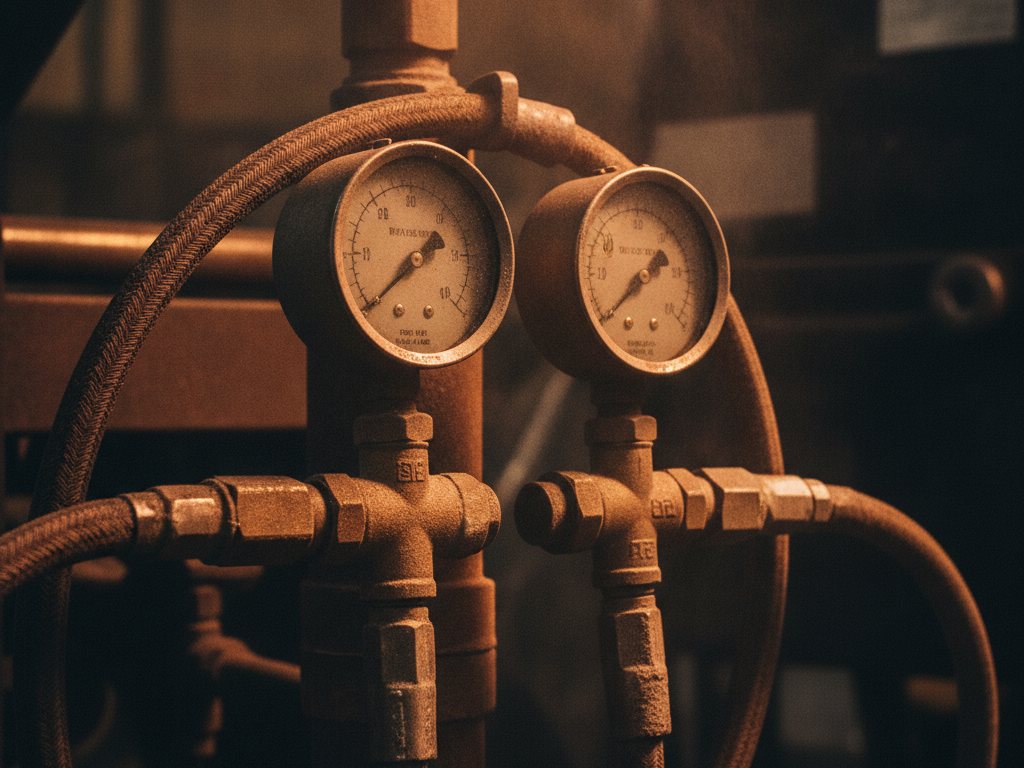
The heart of the rig. It heats, pressurizes, and mixes the two spray foam chemical components — the A side (isocyanate) and B side (resin blend) — in a precise 1:1 ratio before they ever reach the gun.
Where the two chemicals finally meet and mix, right at the point of application. The gun's internal mixing chamber and tip size affect spray pattern and output rate.
The A and B side chemicals travel from the proportioner to the gun through separate heated hose lines. Keeping both lines at a consistent, matched temperature is what keeps the ratio correct all the way to the tip.
Rigs are typically mounted in a trailer or truck and run on an onboard generator, since the proportioner's heaters and pumps need stable, sustained power — often at a jobsite with no other electricity available.
Spray foam is a two-component chemical reaction. The A side and B side are stored separately, stay separate all the way through the proportioner and the heated hoses, and only combine at the gun's mixing chamber the instant they're sprayed. That's not a simplification for the sake of a tidy explanation — it's literally how the chemistry has to work, because once the two sides mix, the reaction starts immediately.
Every part of the rig exists to keep that reaction on-spec: the proportioner keeps pressure and volume matched, the hoses keep both lines at the same temperature over distance, and the generator keeps all of it powered consistently for the length of the job. A weak link anywhere in that chain — a pressure imbalance, a cold spot in a hose, a power fluctuation — can throw off the ratio at the gun, even if every other part of the system is working fine.
Spray foam proportioners generally use one of a few pumping approaches to move and mix the chemical components at the correct ratio — commonly categorized as fixed-ratio hydraulic pumping, variable-ratio systems, and air-driven proportioning. Each approach handles pressure and ratio control a little differently, but the goal is the same: deliver both components at a precise, matched 1:1 rate.
The proportioner uses check valves and metering pumps to draw the A and B side chemicals from separate supply drums, pressurize each line independently, and regulate flow so that equal volumes reach the hoses at the same time. If a valve wears out or a seal fails, the ratio drifts — which is exactly why routine valve inspection is part of standard rig maintenance.