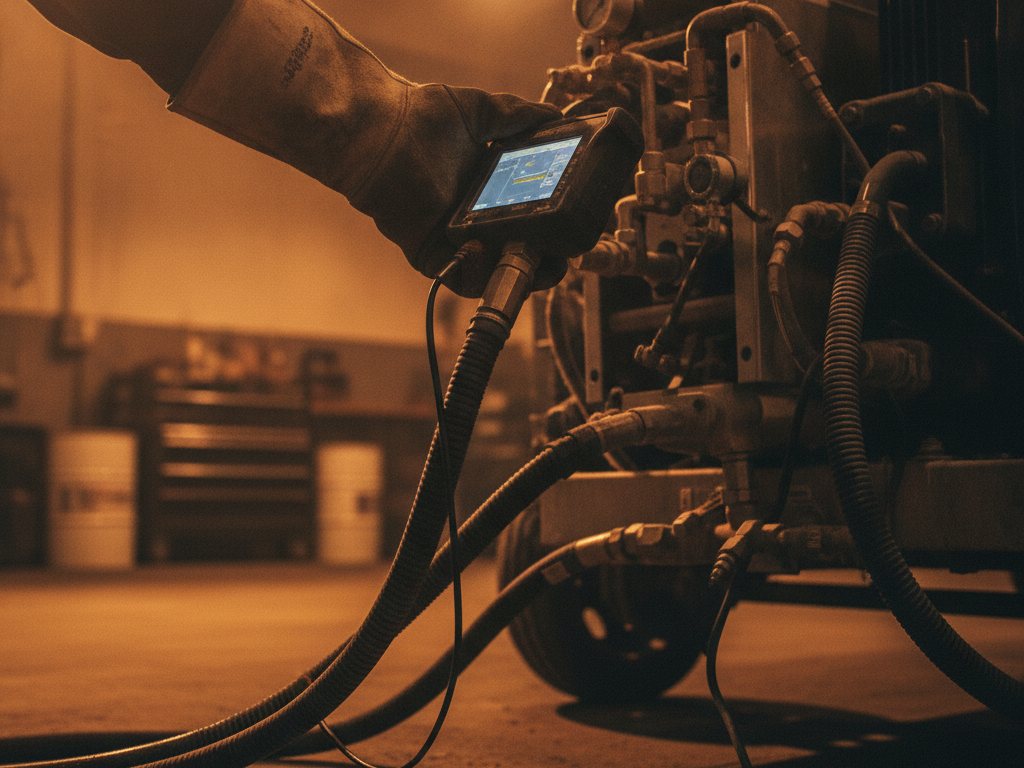
A spray foam rig is a working piece of industrial equipment, not a set-it-and-forget-it tool — and the maintenance schedule that keeps it reliable isn't complicated, just consistent. Here's a practical breakdown of what needs attention and how often.
Daily / Pre-Shift
Visual hose inspection — check for cracks, kinks, or wear along the full length of the heated hoses, especially at connection points where stress concentrates.
Filter check — a quick look at the in-line filters on both the A and B sides catches early clogging before it affects ratio.
Fluid level check — confirm both chemical drums have adequate supply and that lines are properly primed before starting.
Weekly
Filter changes — depending on usage volume and material, weekly filter replacement on both sides is a common baseline (adjust based on your specific manufacturer's recommendation and how heavily the rig is used).
Gun cleaning — a thorough clean of the spray gun, not just a quick rinse, prevents buildup that affects spray pattern and mixing at the tip.
Generator check — fluid levels, filter condition, and a general run check on the power source that the whole rig depends on.
Monthly
Pump seal inspection — seals wear gradually, and catching early wear during a scheduled check is far less disruptive than discovering it mid-job as an off-ratio problem.
Calibration verification — confirming the proportioner's actual output ratio against its target, not just trusting that the gauges look right.
Full hose system check — beyond the daily visual, a more thorough inspection of heating elements and insulation along the hose length.
Annually (or Per Manufacturer Schedule)
Full proportioner service — many manufacturers specify an annual (or hours-based) full service interval covering pumps, heaters, and internal components that aren't practical to inspect on a daily or weekly basis.
Generator major service — oil changes, filter replacement, and a full inspection consistent with the generator manufacturer's schedule.
Why This Schedule, Not a Looser One
Every item on this list connects back to the same underlying risk: a small, gradual equipment issue that goes unnoticed until it shows up as off-ratio foam on a real job. The daily and weekly items are cheap and fast — a few minutes that catch the vast majority of problems before they cost a callback. The monthly and annual items are where the more expensive, harder-to-catch issues (seal wear, calibration drift) get addressed before they become field failures.
The Real Cost of Skipping It
A rig that's "running fine" can mask developing issues for weeks before a problem surfaces — and by the time it does, it's usually mid-job, not on a convenient schedule. Contractors who stick to a real maintenance schedule aren't just protecting their equipment investment; they're protecting every job that equipment touches.